Remedial concrete · Sydney
Concrete Cancer & Spalling Repair Sydney
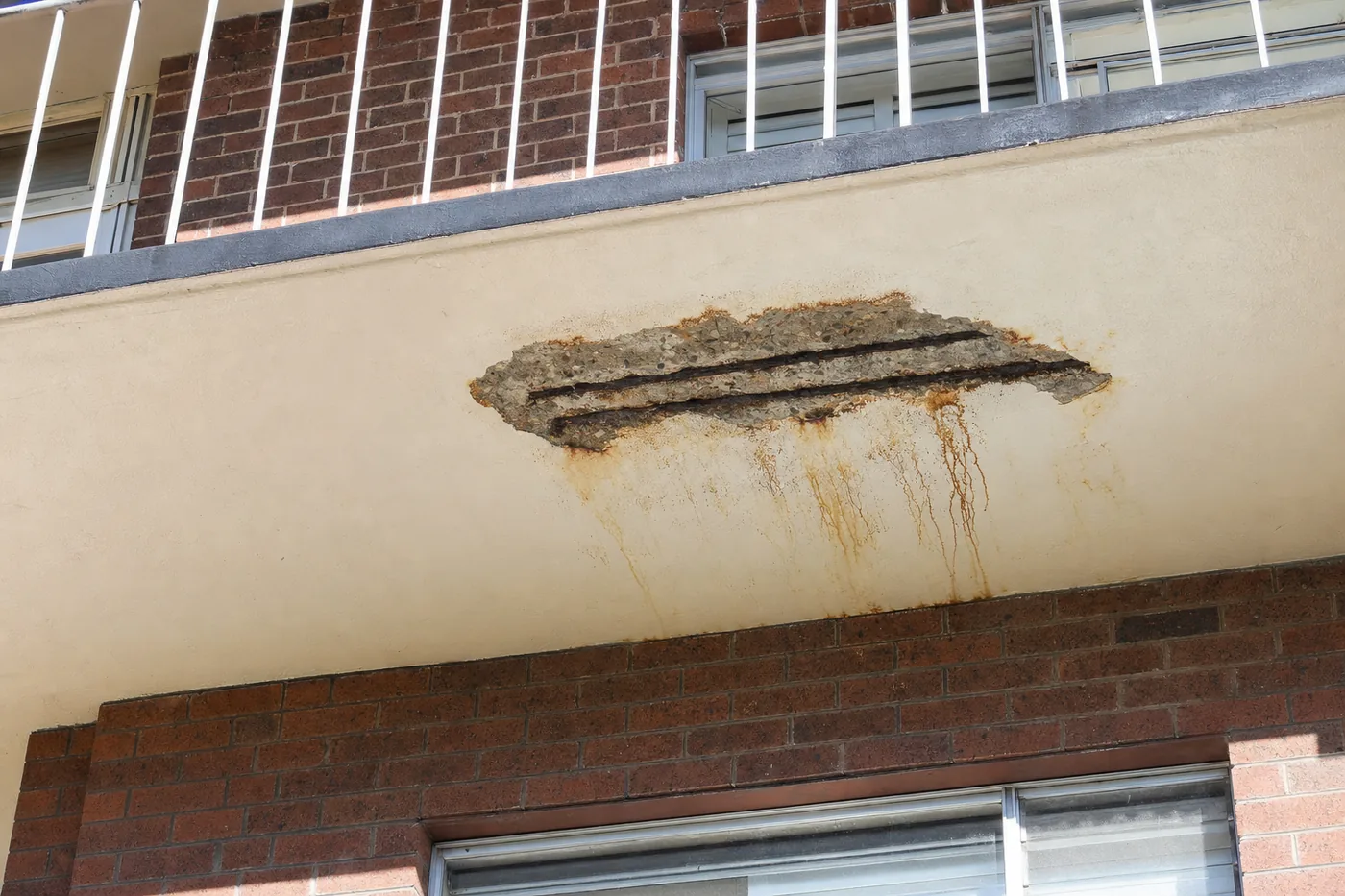
Concrete cancer is the reinforcing steel inside a slab rusting and swelling until it pushes the concrete off. It is repaired by breaking back to sound concrete, treating the steel and reinstating — not by patching the surface, which leaves the steel corroding underneath.
Thanks — we have your enquiry. Someone will be in touch shortly. Prefer to talk now? Call (02) 9072 0776.
- Residential building work over A$5,000 in NSW requires a contractor licence
- Remedial work on a Class 2 building is covered by the NSW registration scheme
- Every quote follows an inspection, because the marked area and the access set the price
What gets repaired
Concrete Cancer & Spalling Repair services in Sydney
 Concrete Cancer & Spalling RepairBreakout to sound concrete, treat the reinforcement, reinstate. The sequence that addresses the cause rather than the stain.See concrete cancer repair
 Balcony & Strata Concrete RepairsCommon property, owners corporation process, and the access equipment that usually decides the quote.See strata repairs
 Concrete Crack Repair & Water IngressCracks, failed membranes and the water that keeps the corrosion going after the concrete has been patched.See crack and water repair
Before you get a quote
Four things worth knowing first
- The stain is not the problem. Concrete cancer is reinforcement corroding inside the slab. Rusting steel expands to several times its original volume, and that pressure is what cracks the concrete covering it and pushes it off. Painting over the result leaves the steel doing exactly what it was doing before.
- A unit block is not a house, legally. Remedial building work on a Class 2 building — most apartment blocks — falls under the NSW Design and Building Practitioners scheme, which requires registered practitioners and a regulated design lodged on the NSW Planning Portal. That is a fact about how the job must be run, and it changes who can do it.
- Scaffold is often the biggest line. On a third-floor balcony the repair itself can be smaller than the cost of standing safely in front of it. Where the scaffold or hoarding stands on the footpath, the council charges for the land it occupies for as long as it stands. It is the line an owners corporation is really voting on.
- The council that owns the street changes the bill. Councils set their own footpath and hoarding fees, and no two schedules are built alike: Inner West Council charges by the square metre per month with a minimum, Mosman Council by the square metre per week. The pricing page sets both out, with the date each was read.
How it works
From your call to a scope
- Tell us the building and what you can see. House, strata, or commercial; which element is affected — balcony edge, soffit, column, façade — and whether concrete has come away or it is cracking and staining so far.
- A Sydney remedial contractor calls you. They ask what a photograph cannot answer: the age of the block, the floor level, access down the side, and whether it is common property or inside a lot.
- Someone looks at it. Hollow concrete is found by sounding the surface, not by eye. The extent is marked out, and that marked area is what gets priced — which is why the quote follows the visit rather than the call.
- You get a scope and a price. Broken out to sound concrete, reinforcement treated, reinstated, and made good — with the access equipment priced as its own line, because on most balconies it is the one that moves.
Concrete Cancer & Spalling Repair across Sydney
Across the eighteen suburbs this site covers that have a dwelling figure, flats run from 34.9 per cent of dwellings in Rozelle to 86.8 per cent in Kirribilli — every one of them above the New South Wales figure of 21.7 per cent. The nineteenth area, Sydney itself, has no dwelling figure here and is not part of that claim. That is why the work here is mostly balconies, soffits and façades on strata buildings rather than on houses. On the ocean-facing suburbs — Bondi, Bronte, Coogee, Clovelly and Maroubra — salt air drives the corrosion from outside, and it shows first on the elevations facing the water. Through the harbour suburbs and the Inner West the driver is more often water getting in and staying in. Cronulla and Vaucluse each carry an ocean side and a sheltered side, so there it depends on which way a building faces.
Where we work
Suburbs we cover
Enquiries are passed to a remedial contractor covering the corridor the building sits in. The Eastern Suburbs, the Sutherland Shire, and the Lower North Shore and Inner West are three different jobs — exposure and access change across them.
- Sydney
- Bondi
- Bronte
- Coogee
- Clovelly
- Maroubra
- Vaucluse
- Cronulla
- Woolooware
- Mosman
- Cremorne
- Neutral Bay
- Kirribilli
- Balmain
- Rozelle
- Drummoyne
- Ashfield
- Summer Hill
- Marrickville
Get a quote today
Tell us the address, the building type and what you can see, and a Sydney remedial contractor covering your area will call you back. Before a quote arrives, the Concrete cancer repair costs and rules check shows which NSW contract, deposit and cooling-off rules apply at your job's value.
Call (02) 9072 0776Last reviewed · Updated · First published